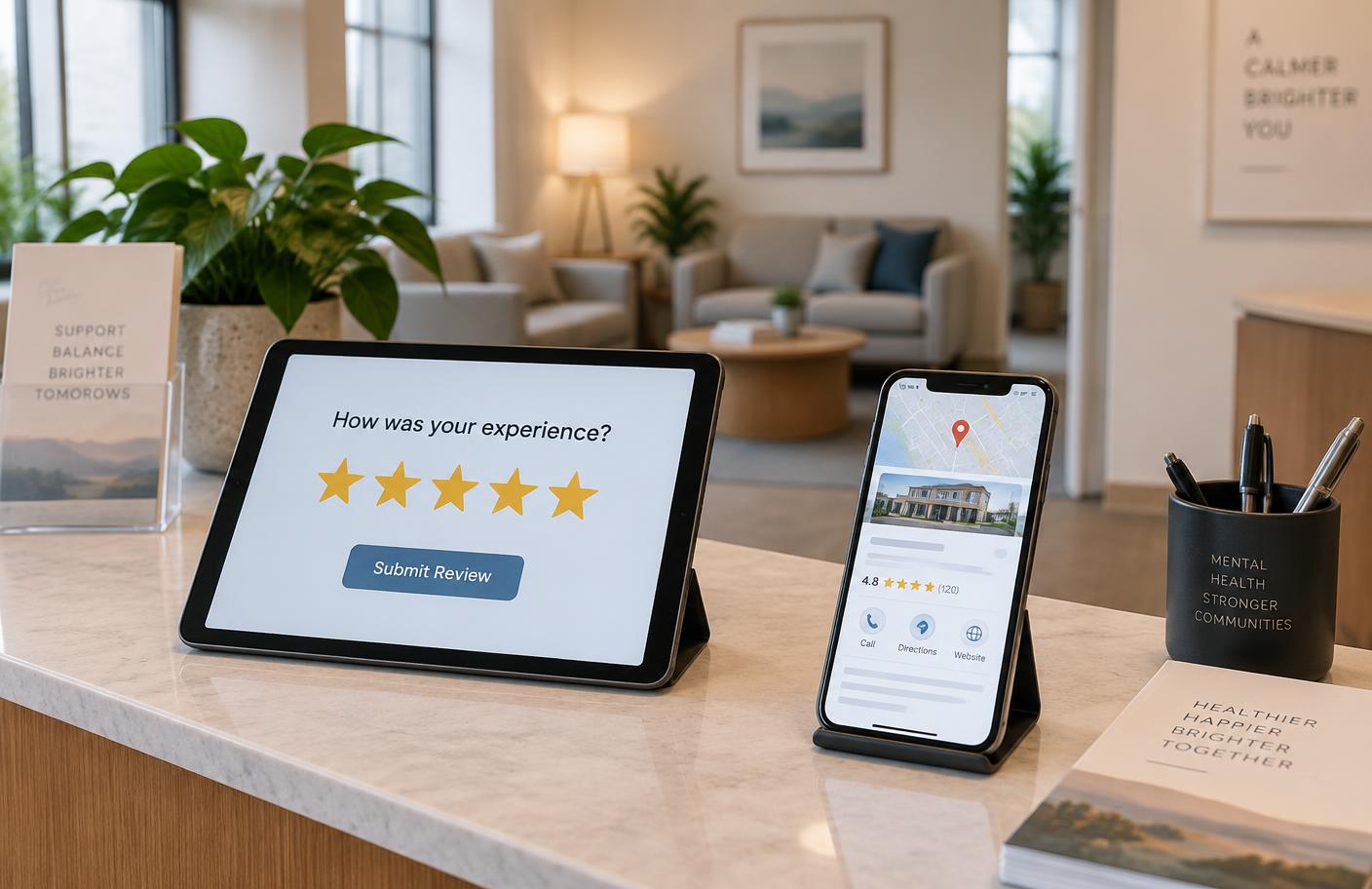
Two psychiatrists can have similar training, similar ratings, and similar clinical strengths, yet receive very different volumes of new patient inquiries. The difference is often not the average star rating. It is whether the practice has a recent, credible, and detailed review profile that helps a prospective patient feel safe choosing it.
Reviews also reinforce local search visibility. They give Google, prospective patients, and AI answer systems consistent evidence about the experience a practice provides.
The practical rule: do not chase a perfect score. Build a steady, ethical process that makes it easy for willing patients to leave honest feedback, then respond without confirming that any reviewer received care.
Why reviews work differently in psychiatry
Leaving a public review for a psychiatric practice can feel more revealing than reviewing a restaurant or contractor. Some patients will never be comfortable doing it, even after an excellent experience. That means passive review collection is especially weak in psychiatry.
The solution is not pressure. It is a private, respectful invitation offered consistently to appropriate patients, with no incentive and no expectation that they disclose a diagnosis or treatment outcome.
What prospective patients actually look for
A psychiatry review profile communicates more than clinical quality. Prospective patients are often looking for signals about the entire experience:
Did the clinician listen and explain the plan?
Was the office respectful and organized?
Were fees, insurance, and next steps clear?
Did the practice respond when the patient had a question?
Did appointments start reasonably close to the scheduled time?
Research analyzing psychiatrist reviews has found that communication, listening, respect, and follow-through are recurring themes in positive sentiment. Reviews of mental-health services also frequently surface operational concerns such as wait times, staff communication, and billing clarity.
That is useful because those are areas a practice can improve directly. Reputation work starts with the patient experience, not with a response template.
Build a compliant review request process
Choose one or two moments when a general request feels natural, such as after a positive service interaction or when a patient voluntarily expresses appreciation. Keep the invitation neutral.
A simple script is enough:
“If you would like to share feedback about your experience with our practice, this link makes it easy. Please only include details you are comfortable making public.”
Do not offer a discount, gift card, drawing entry, or other reward. Incentivized reviews can violate platform rules and weaken trust. Do not ask only for positive reviews. The request should be for honest feedback.
Your legal and compliance advisors should approve the workflow, especially any use of patient contact information for review requests.
Respond without confirming the reviewer is a patient
A patient can publicly discuss their own experience. The practice must be much more careful. Even a polite response can disclose protected information if it confirms that the person received care, missed an appointment, or discussed a specific concern with staff.
Use a response that protects privacy:
“We take feedback seriously and aim to provide clear, respectful service. Because privacy matters, we cannot discuss individual situations here. Please contact our practice manager directly so concerns can be reviewed.”
Avoid details. Do not argue. Do not say “we reviewed your chart” or “you missed your appointment.” Move the conversation to a private channel and follow your approved privacy process.
Recency and detail matter more than a one-time campaign
A burst of reviews followed by a year of silence looks less credible than a steady pattern of feedback. Build the request into an ordinary workflow and review it monthly.
Track:
Number of new reviews by platform
Average rating and rating distribution
Recurring positive and negative themes
Response time to operational complaints
Calls and website visits from the Google Business Profile
Do not set a quota for individual clinicians. The goal is a reliable practice process, not pressure on staff or patients.
Connect reviews to local and AI visibility
A complete Google Business Profile for a medical practice establishes location, category, services, and contact details. Reviews add current public evidence that the practice is active and trusted.
For AI visibility, consistency matters. Your website, directories, professional profiles, and review platforms should describe the same practice, clinicians, specialties, and location. That corroboration makes it easier for Google and ChatGPT to identify the practice confidently when someone asks who provides psychiatric care nearby.
Reviews are not a replacement for a clear website or accurate listings. They are one part of the evidence system.
Audit your psychiatry review profile
Compare your profile with the practices that appear for your highest-value local searches. Record:
Review count and average rating
Date of the newest ten reviews
Whether reviews describe communication, medication management, access, or office experience
Whether the practice responds appropriately
Whether negative themes reveal a fixable operational problem
Whether clinician and practice profiles are accurate and non-duplicative
The useful question is not “How do we get more five-star reviews?” It is “What experience are patients describing, and does our public presence make the right practice easy to trust?”
When the experience, request process, and online information agree, reputation becomes an asset that supports both patient choice and visibility.
Frequently asked questions
Can psychiatrists ask patients for reviews?
Practices can use a neutral, privacy-conscious request process approved by their legal and compliance advisors. Do not pressure patients, request only positive reviews, or offer incentives.
How should a psychiatrist respond to a negative review?
Do not confirm that the reviewer received care or discuss details. Use a general response that protects privacy and invites the person to contact the practice manager privately.
Do reviews help psychiatrists rank on Google?
A recent, credible review profile supports local trust and complements an accurate Google Business Profile, consistent listings, and a clear website. Reviews are one part of the visibility system.
About Zen's Web
We have worked with 200+ businesses over the last 8 years, from local service businesses to behavioral health practices. We run websites, local visibility, and advertising as one system, and we guarantee more customers within 90 days. Everything we write here comes from work we have actually done, not from recycled advice.