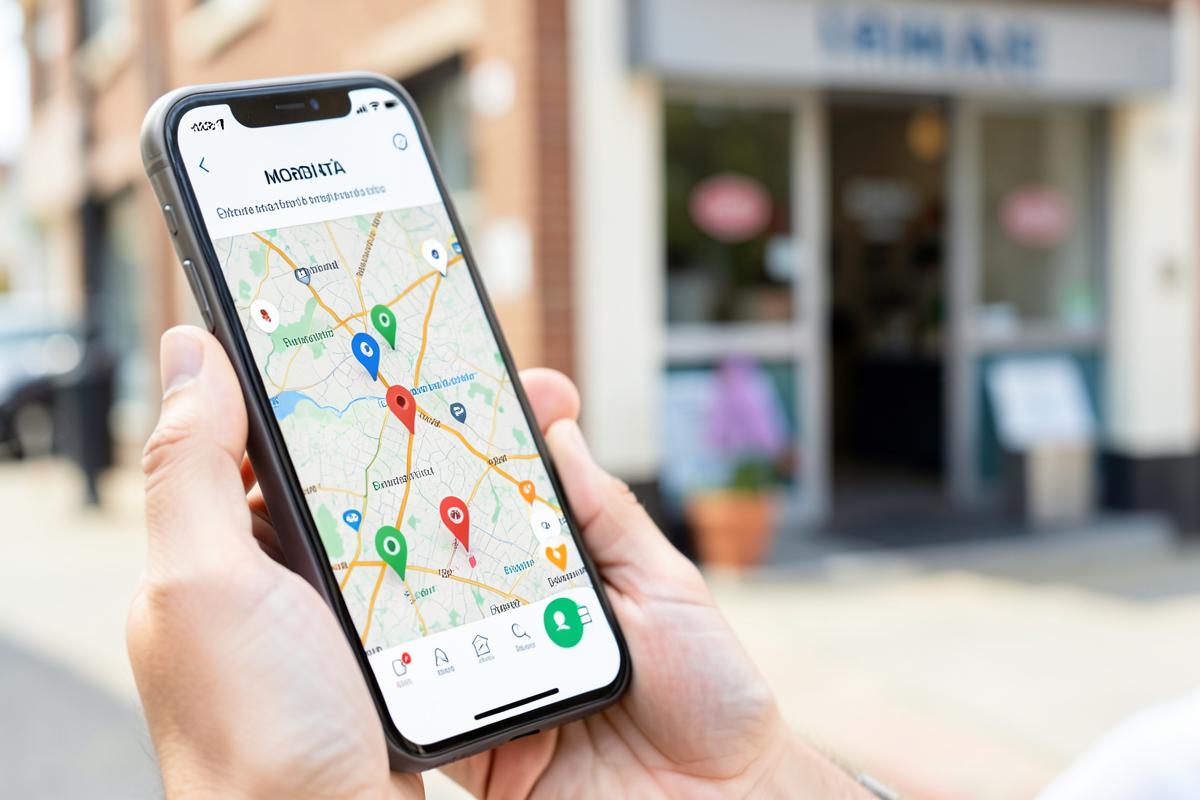
For a practice that people physically drive to, the Google Business Profile is usually worth more than the website. It is the thing people see in the map pack, the thing that shows reviews, and the thing that produces calls without anyone visiting a single page.
It is also, in almost every audit I run, the most neglected asset the practice owns.
The pattern I see repeatedly: profiles get set up once during launch, then never touched. Meanwhile the competitor two miles away posts weekly, collects four reviews a month, and quietly takes the top spot in the map pack for every valuable search in the city.
How Google decides who shows in the map pack
Three inputs, in Google's own framing:
- Relevance. How well your profile matches what was searched. Driven by category, services, and the words on your profile and site.
- Distance. How close you are to the searcher. You cannot change this, but you can influence how wide a radius you compete in by strengthening the other two.
- Prominence. How well known you are. Reviews, links, citations, and general web presence.
Practices tend to obsess over distance, which they cannot control, and ignore relevance, which they can fix in an afternoon.
The profile checklist, in priority order
Primary category
The single highest-leverage field. Look up the top three practices ranking for your most valuable search and check which primary category they use. If yours differs, that is often the whole gap.
Secondary categories help too, but do not stuff them. Two or three relevant ones beat nine loosely related ones.
Services, listed individually
Most healthcare profiles leave this empty. Every service you offer should be listed as its own entry with a short description using the words patients search for. This is a direct relevance signal and it is free.
Business description
750 characters. Lead with what you treat and where. Avoid the mission statement opening. Include the conditions and the city naturally, because that is what people type.
Hours, including special hours
Wrong hours are the fastest way to lose a patient permanently. If you keep limited or variable hours, say so explicitly rather than leaving fields blank. One psychiatric practice I work with runs Thursday through Saturday with the earlier weekdays available only when the schedule allows, and stating that clearly stopped the wasted calls and the no-shows.
Photos
Twenty or more, refreshed monthly. Exterior with the building visible from the road, parking, waiting room, treatment rooms, and each clinician. Geotagging is unnecessary. Being real is essential.
Q&A
The Q&A section is public and anyone can answer, including people who do not work for you. Seed it yourself with the five questions your front desk answers every day:
- Do you take my insurance?
- How long is the wait for a new patient appointment?
- Do you offer telehealth?
- Do you see children or adolescents?
- Where do I park?
Posts
Weekly, each linking to a real page on your site. Posts are not a strong direct ranking factor, but they signal activity, they occupy space in the listing, and they give returning searchers something current to see.
Reviews: the part that decides the outcome
Review signals influence both ranking and click-through, and click-through influences ranking. Getting this right compounds.
| Dimension | What matters |
|---|---|
| Count | Enough to be credible relative to competitors in your city |
| Velocity | A steady flow beats a historical pile. Twelve in three months beats sixty from 2023. |
| Recency | The top reviews shown are recent. Old reviews stop working. |
| Content | Reviews mentioning the condition and the city help relevance |
| Responses | Reply to all of them, positive and negative |
How to actually get them without being annoying: build the ask into a moment that already exists. After a successful course of treatment, after a discharge, or in the standard follow-up email. A short link, one sentence, no pressure. Practices that systematize this get four to eight reviews a month without anyone thinking about it.
On negative reviews: in healthcare you cannot respond with clinical detail, and you should not try. A brief, human, non-specific reply that invites an offline conversation is the correct move. Prospective patients read the response more than the complaint.
On HIPAA: do not confirm that a reviewer was a patient, do not reference any care detail, and never dispute the facts of a visit in public. Have a scripted response template approved in advance so nobody improvises at 9pm.