← All articles

Local Business Growth

The Local Pack Playbook: How to Rank in Google's Top Three Map Results

The map pack is a narrower contest than general search, and most of your competitors are not doing this work properly.

By Zen's Web · September 29, 2026 · 9 min read

The Local Pack Playbook: How to Rank in Google's Top Three Map Results
What's in this article

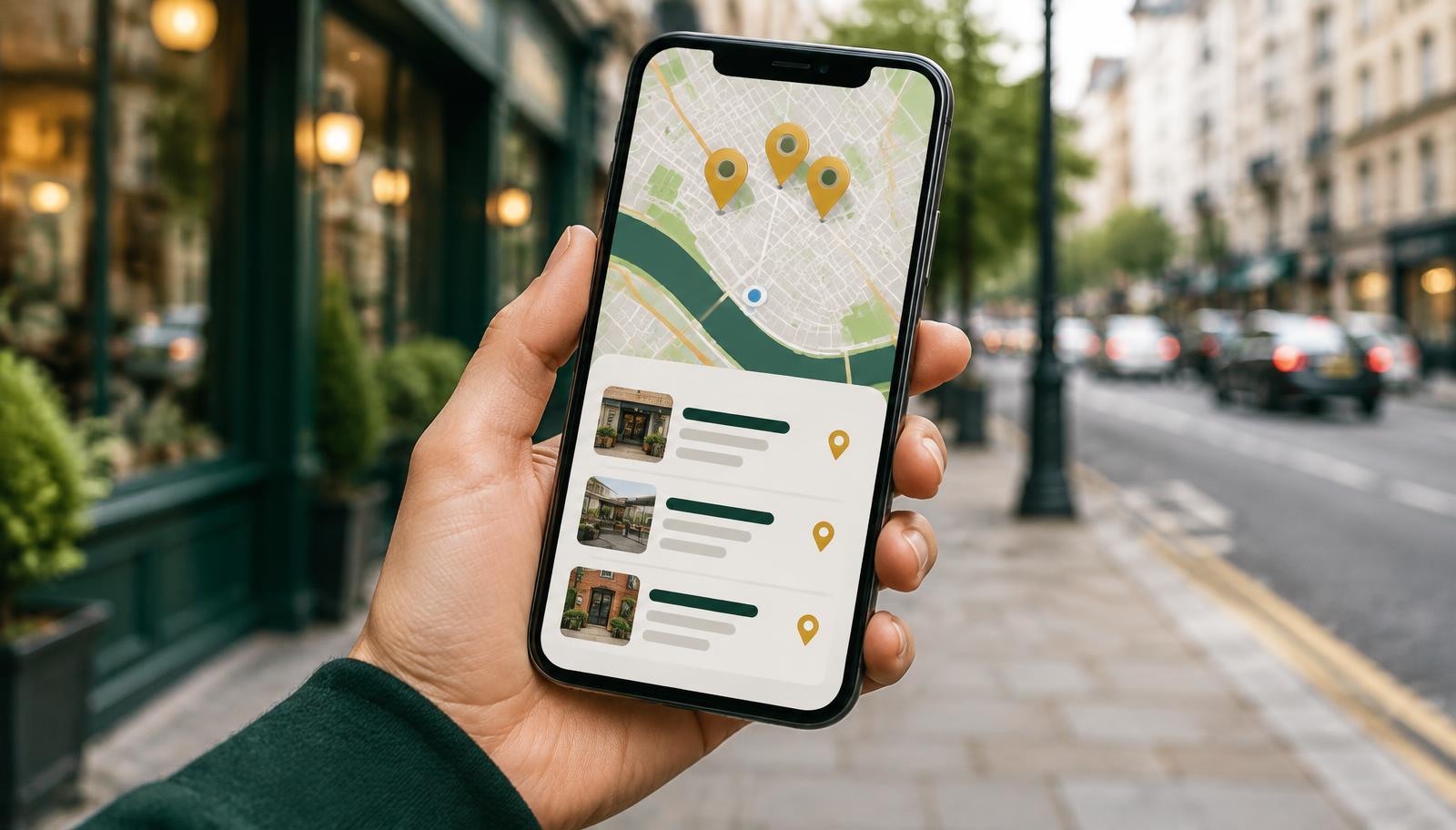
For most local searches, the three businesses shown in the map results get the overwhelming share of calls. Everyone below is competing for what is left. If customers drive to you, or you drive to them, the map pack is usually worth more than your website ranking.

The good news is that the map pack is a narrower contest than general search. You are not competing with national directories. You are competing with the other businesses near you, and most of them are not doing this work properly.

What decides the three spots

Google weighs three things: relevance, distance, and prominence.

Relevance is how well your profile matches what the person searched. This is the part you control most directly and the part most businesses handle worst.

Distance is how close you are to the searcher. You cannot change your address, but you can change how much of your area you realistically compete in.

Prominence is how well known and well regarded you appear to be, built from reviews, mentions across the web, consistency of your business information, and the strength of your website.

Everything below is an attempt to improve relevance and prominence, because those are the two you can move.

Step one: get the primary category right

This single field moves more rankings than almost anything else on your profile, and it is regularly wrong.

Search the term you most want to rank for, look at the three businesses currently showing, and find their primary category. If they are all using a category you are not, that is your gap. Match it, then use secondary categories for the rest of what you do.

Be specific rather than broad. A specific category that matches the search beats a general one nearly every time.

Owner photographing her storefront for her business listing

Step two: complete the profile properly

Empty fields cost you. Fill every one that applies.

  • Business name exactly as it appears on your signage, with no keyword stuffing
  • Address formatted the same way everywhere online
  • Local phone number, the same one used on your site
  • Hours, including holiday hours, kept current
  • Services listed individually, each with a real description rather than a single line
  • Products where relevant
  • Attributes, which are what fuel the filters people use
  • A description that states what you do, who you serve, and where

Step three: photos, consistently

Profiles with a steady flow of recent photos perform better and convert better. Exterior shots so people can find you. Interior shots so they know what to expect. Team photos. The actual work.

A handful of images uploaded once is a checkbox. A few new images every month is a signal of an active business.

Step four: reviews, at a steady pace

Review count matters, but pace matters more. A business collecting five reviews a month consistently outperforms one that collected sixty two years ago and nothing since.

Build the ask into your process rather than running occasional campaigns. The best moment is right after a good outcome, in person or by text, with a direct link.

Respond to every review, positive and negative. Responses are visible, they demonstrate an attentive business, and they give you a natural place to mention the service and the area without it reading as manipulation.

Step five: posts and questions

Post weekly. It does not need to be elaborate: an offer, a new service, a seasonal note, a recent job. Posts keep the profile active and give people something current to look at when they are comparing you to two other options.

Seed the questions section with the questions you genuinely get asked and answer them. If you leave it empty, anyone can answer for you.

Step six: consistency across the web

Your name, address, and phone number should be identical everywhere they appear: your site, industry directories, mapping services, social profiles, and any listing you were added to years ago and forgot about.

Inconsistency creates doubt about which information is correct, and doubt suppresses prominence. This is dull work with a real payoff, and it is largely a one-time cleanup with light maintenance afterwards.

Step seven: the website behind the profile

The profile does not stand alone. It links to a page on your site, and the strength and relevance of that page feeds back into how the profile ranks.

Link to a page that matches the search, not always the homepage. If you rank for one service in one city, link the page about that service in that city. Make sure your address and phone number appear in text on the site, and add local business structured data so there is no ambiguity about who and where you are.

What to expect and when

Category and profile corrections often show movement within two to six weeks. Review pace and posting build over two to three months. Citation cleanup works slowly in the background. Beating a well-established competitor in a dense market takes longer than beating an inactive one in a quiet market.

The pattern we see repeatedly is that the first significant jump comes from fixing the category and completing the profile, and the durable gains come from reviews and consistency over the following quarter.

The quick audit

Search your main service plus your city on a phone, not logged in. Look at the three profiles that appear and compare them with yours on category, review count, review recency, photo count, posts, and how complete the services list is.

Whatever they are doing that you are not, that is your plan for the next ninety days.

Frequently asked questions

What matters most for map pack ranking?

Primary category, a complete profile, review pace, consistent business information across the web, and a relevant page on your own site behind the profile.

How long does it take to rank in the map pack?

Category and profile fixes often show movement in two to six weeks. Review pace and consistency build over the following two to three months.

Should my profile link to my homepage?

Link to the page that matches the search. If you are ranking for one service in one city, link the page about that service in that city.

Zen's Web

About Zen's Web

We have worked with 200+ businesses over the last 8 years, from local service businesses to behavioral health practices. We run websites, local visibility, and advertising as one system, and we guarantee more customers within 90 days. Everything we write here comes from work we have actually done, not from recycled advice.