
← All articles

Local Business Growth

Directories vs Your Own Website: Why Rented Traffic Limits Growth

Directories buy you customers this month. An owned site builds an asset that keeps producing them on your terms.

By Zen's Web · October 7, 2026 · 8 min read

Directories vs Your Own Website: Why Rented Traffic Limits Growth
What's in this article

Plenty of local businesses run almost entirely on directories and marketplace platforms. The listing brings the inquiries, the inquiries bring the work, and the website is a placeholder nobody has looked at in years.

It works, until it does not. And the reason it stops working is always outside your control.

What you are actually renting

A directory profile is rented space. You do not own the traffic, the placement, the presentation, or the relationship. The platform does, and the platform's interests are not yours.

Three things happen predictably over time.

The price goes up. Once a platform is a reliable source of customers for you, the cost of staying visible on it rises. You pay more for the same position because leaving is painful.

Your competitors appear on your profile. Directories are built to keep visitors on the directory. Your listing sits beside three alternatives, sorted by criteria you do not control, and a share of the people who came looking for you leave with someone else.

The rules change. Ranking criteria shift, a new paid tier appears, the layout changes and your section moves below the fold. You adapt or you lose volume, and you are informed after the fact.

You are also competing on the platform's terms, which usually means price and proximity, because that is what the filters expose. Everything that actually differentiates you is compressed into a short blurb.

What you own instead

A website you control is different in kind, not just in degree.

The traffic is yours. A page that ranks keeps producing inquiries next year without a monthly fee attached to visibility.

The presentation is yours. You decide what is emphasised, what proof appears, what the next step is, and nobody puts a competitor next to your contact button.

The data is yours. You see what people search, which pages produce inquiries, and where they leave. On a directory you see a lead count and nothing underneath it.

The relationship is direct. The customer contacts you, not an intermediary, and you keep the contact details.

And it compounds. Work done on your own site accumulates. Work done on a rented profile evaporates the moment you stop paying.
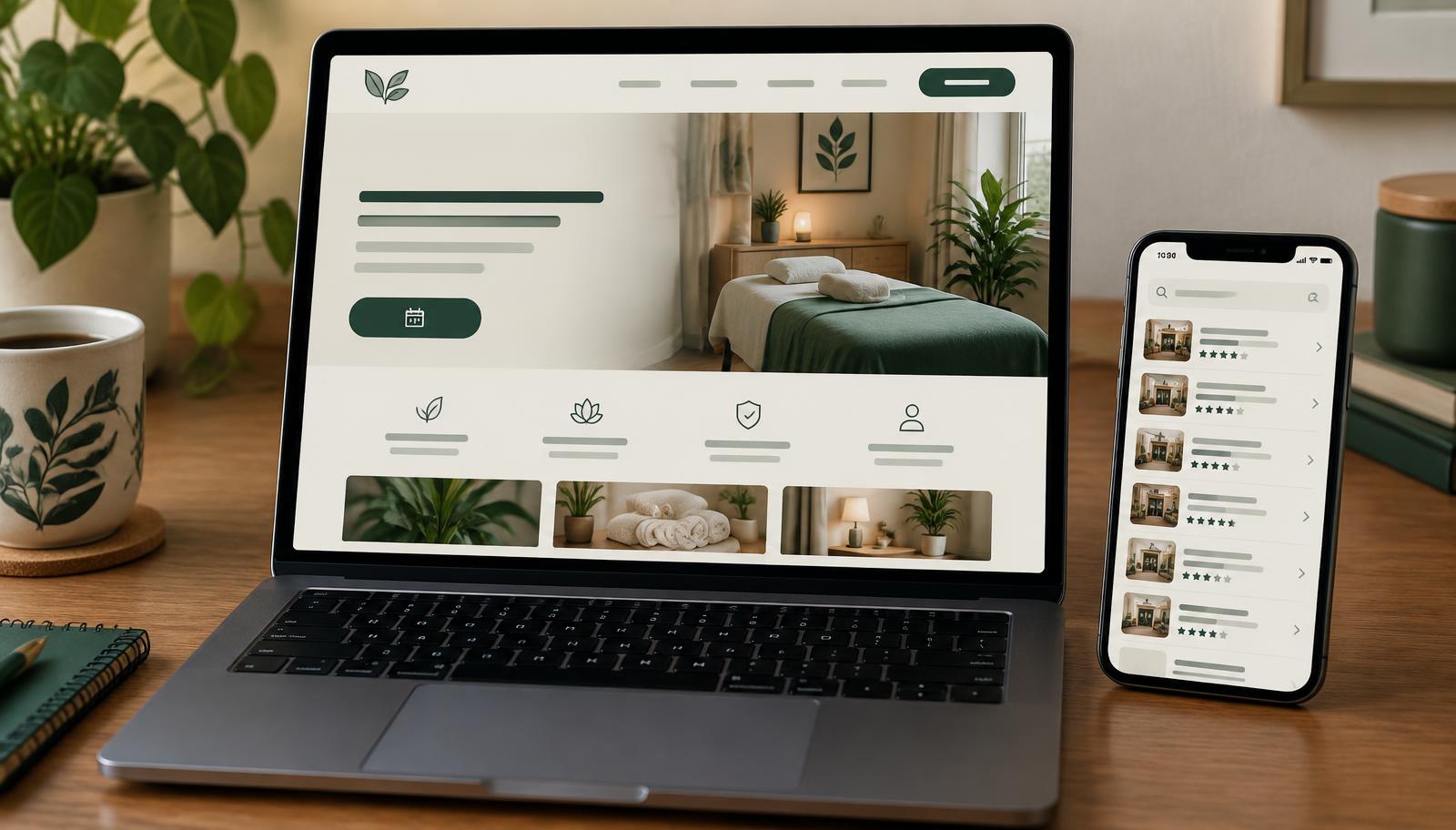
Your own website compared with a crowded directory listing

The honest case for directories

None of this means abandoning them. Directories are genuinely useful in two ways.

They provide early volume while your own visibility is being built, which matters if you need work this month rather than next quarter. And they supply the third-party confirmation that both search engines and AI assistants look for when deciding whether your business is real and worth naming.

A complete, consistent listing on the directories that matter in your industry is part of a healthy setup. The failure is not using them. The failure is depending on them.

The dependency test

Ask one question: if your largest directory doubled its price next month, or dropped you three places, what would happen to your revenue?

If the answer is serious trouble, that is not a marketing problem, it is a business risk. Any channel you do not control should be a contribution, not a foundation.

A reasonable target for most local businesses is that inquiries from channels you own, your website and your Google Business Profile, exceed inquiries from platforms you rent. Getting there takes a few quarters, not a few weeks.

How the shift actually happens

You do not switch off the directories and hope. You build the owned side while the rented side keeps paying the bills.

Start with the pages that match what people search for: one page per service, and pages for the areas you serve, each written to answer the questions buyers ask before they commit. Make the Google Business Profile genuinely active, since for local businesses it is the highest-intent free channel available. Keep reviews arriving steadily. Then tighten what happens after an inquiry arrives, because more traffic into a slow follow-up process changes nothing.

Track where each new customer came from, honestly, for a few months. Most businesses that do this are surprised by how much of what they credited to the directory actually started with a search for their name after seeing them somewhere else.

Ownership includes the code

One detail worth checking when someone builds your site: what happens to it if you leave. A site you cannot take with you is another rented asset wearing a different label.

Our position is straightforward. The website belongs to the business paying for it. We run the platform it lives on, and if a client ever wants full independent control, we export the code and the content and they take it with them.

Ask whoever built or hosts your site the same question before you need the answer.

The point

Directories buy you customers this month. An owned website builds an asset that keeps producing them, on your terms, with your name on it, at a cost that does not rise every time you become more successful.

Use the rented channels. Just do not build your business on ground somebody else can move.

Frequently asked questions

Are business directories worth it?

They are useful for early volume and for third-party confirmation of your business. The mistake is depending on them as your main source of customers.

How do I reduce dependence on directory leads?

Build service and service-area pages on your own site, make your Google Business Profile genuinely active, keep reviews arriving, and tighten follow-up.

Do I own the website someone builds for me?

You should. Ask before you sign what happens to the code and content if you leave. Our clients own their website and content, and we export it if they move on.

Zen's Web

About Zen's Web

We have worked with 200+ businesses over the last 8 years, from local service businesses to behavioral health practices. We run websites, local visibility, and advertising as one system, and we guarantee more customers within 90 days. Everything we write here comes from work we have actually done, not from recycled advice.