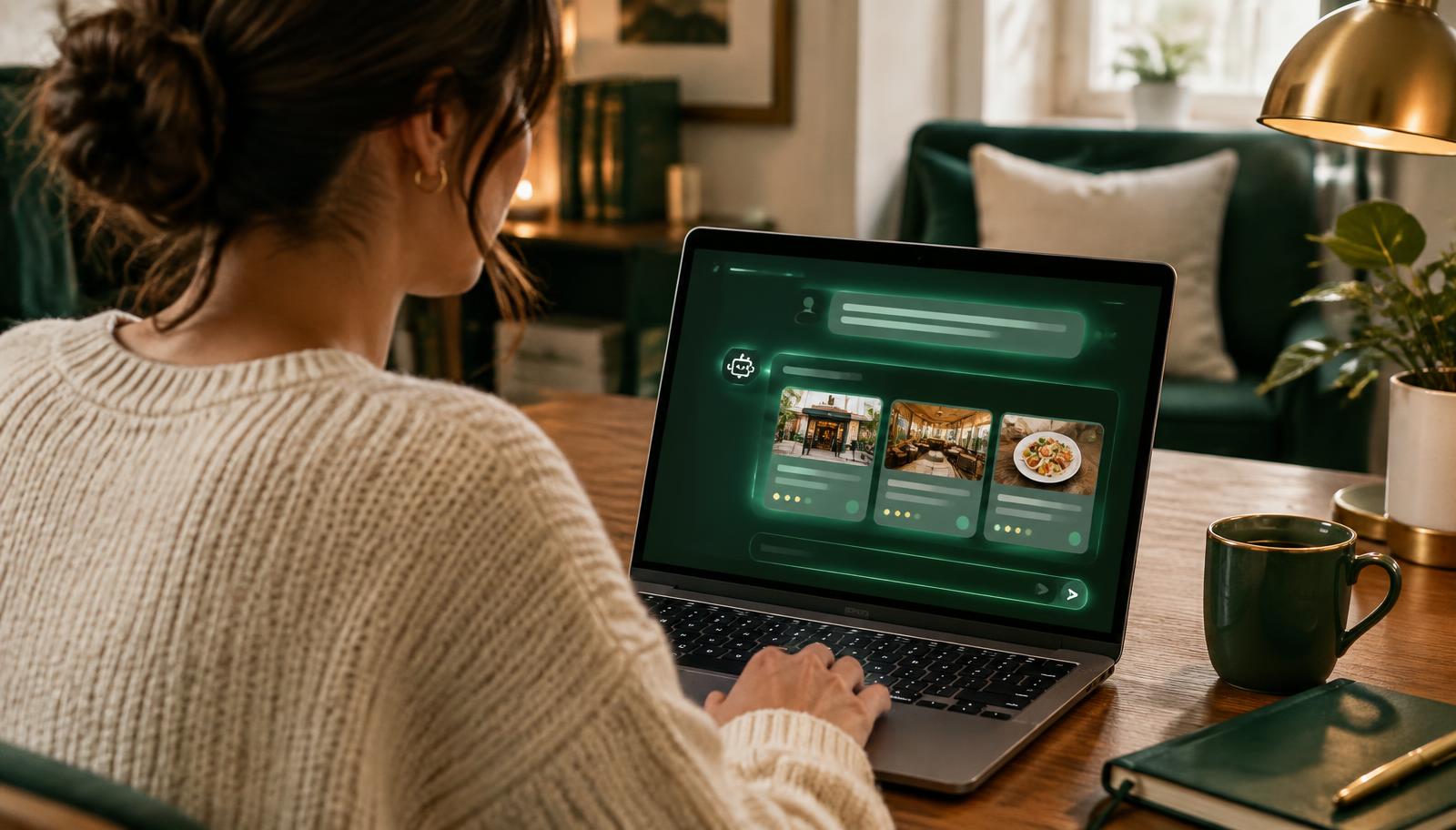
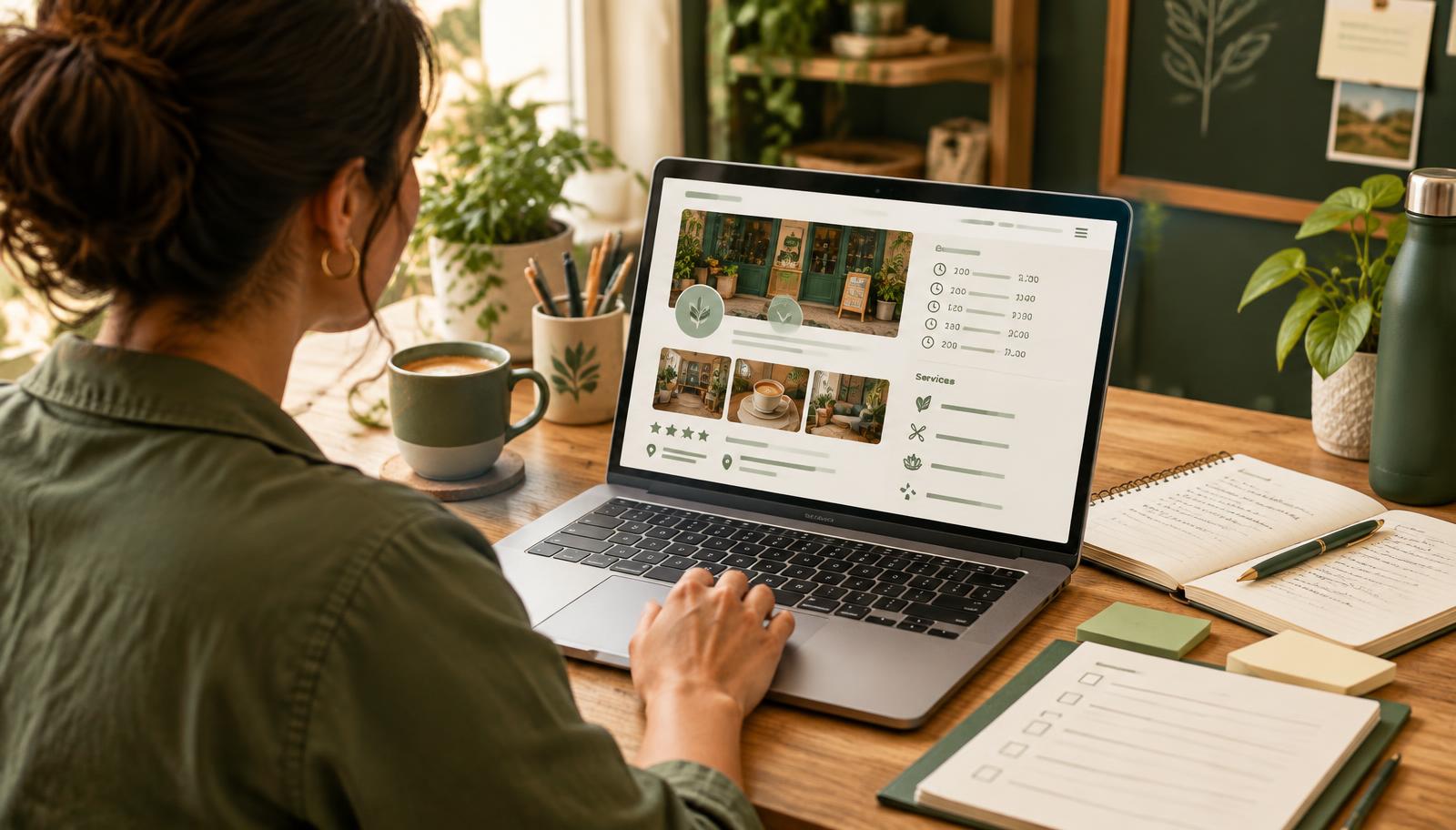
A growing share of people looking for a local service no longer start with a list of ten blue links. They ask a question and get an answer, often with two or three businesses named in it. If your business is not one of the names, the comparison never happens.
Being recommended is related to ranking, but it is not the same job. Ranking puts you in a list. Being recommended means a system decided it was confident enough about who you are to say your name.
How these systems decide who to name
Whether it is Google's AI answers or a chat assistant, the underlying behaviour is similar. The system needs to be confident about three things before it will name a business.
Who you are. What you do, stated plainly and consistently.
Where you operate. A specific, unambiguous service area.
That someone else agrees. Confirmation of your existence and quality from sources that are not your own website.
Most local businesses fail on at least one, usually the third.
Make your identity unmistakable
Assistants do not infer well from vague language. A homepage that opens with a mood and a promise gives them nothing to work with.
Say what you do, for whom, and where, in plain sentences, on your homepage and on every service page. Use the words customers use, not internal terminology. Have a page for each service rather than one page listing everything, because a page about one thing is far easier to cite for that thing.
Add structured data so the machine-readable version of your business matches the human-readable one: business type, address, phone, hours, service area, services. This is not a ranking trick, it is removing ambiguity.
Answer the questions people actually ask
These systems are built to answer questions, so they favour content that already reads like an answer.
Write down the ten questions you get asked before someone buys. What does it cost. How soon can you come out. Do you serve my area. Do you take my insurance. What happens on the first visit. How long does it take.
Answer each one directly, in a couple of sentences, before you elaborate. Put the answer first and the context after. Content organised this way gets extracted and quoted. Content that builds up to its point over six paragraphs does not.
Be specific. Ranges, timeframes, and real numbers get used. Phrases like competitive pricing and fast turnaround do not.
Get corroborated elsewhere
This is the part that separates businesses that get named from businesses that do not.
If everything a system knows about you comes from your own website, it has one source with an obvious interest. Confidence stays low. When your details are confirmed across your Google Business Profile, industry directories, local organisations, news mentions, and review platforms, confidence rises and your name becomes safe to give.
Practical version of this work:
A complete, active Google Business Profile with steady recent reviews
Consistent name, address, and phone everywhere they appear
Listings on the directories that matter in your industry
Mentions from local sources, associations, suppliers, partners, and community organisations
Reviews that describe the specific service, because review text is readable content
Do not block the crawlers
Some sites unintentionally prevent the systems they want to be seen by from reading them. Content loaded only after interaction, essential information locked inside images, or blanket crawl restrictions all have the same effect.
Keep the important facts in real text. Keep pages fast. Make sure the pages you want cited are reachable without a login and not blocked in your site's crawl settings.
Measure it the only way that works
There is no dashboard for this yet. The workable method is manual and takes twenty minutes a month.
Write down your ten most valuable customer questions with your city attached. Run them in Google and in a couple of assistants. Record whether you are named, who is named instead, and which sources get cited.
Those cited sources are your target list. If a local directory or a roundup article keeps appearing, getting accurately listed there is now a concrete task rather than a guess.
What this does not replace
None of this replaces local search fundamentals. The map pack still drives most calls for businesses people travel to. The useful part is that the same work improves both: clear service pages, accurate business information, steady reviews, and third-party confirmation raise your ranking and your chance of being recommended at the same time.
The businesses being named in AI answers are rarely the ones doing something exotic. They are the ones that are easy to understand, consistent everywhere, and confirmed by sources other than themselves.
Frequently asked questions
How do I get my business recommended by ChatGPT?
Make what you do and where you do it unmistakable in plain text, answer real customer questions directly, and get your details confirmed across profiles, directories and local sources.
Does AI visibility replace local SEO?
No. The map pack still drives most calls for local businesses. The same work improves both.
How do I track whether AI answers name my business?
Run your ten most valuable customer questions with your city attached each month and record whether you are named and which sources are cited.
About Zen's Web
We have worked with 200+ businesses over the last 8 years, from local service businesses to behavioral health practices. We run websites, local visibility, and advertising as one system, and we guarantee more customers within 90 days. Everything we write here comes from work we have actually done, not from recycled advice.